Commercial Roofs Handled Without Business Disruption
Commercial roofing in Bonners Ferry for business properties with flat or low-slope systems showing structural or membrane failure
Flat roofing and standing seam metal systems behave differently from residential pitched roofs, and that difference shows up immediately in how a commercial project is scoped. North Star Roofing provides commercial roof installation and replacement in Bonners Ferry, specializing in the two system types most common on local business properties: built-up or membrane flat roofing and standing seam metal. Both systems require an inspection protocol that goes beyond the roof surface—structural framing and interior ceiling conditions tell a more accurate story about what the roof has been doing than the membrane or panel surface alone.
Commercial projects begin with a comprehensive structural and attic-space assessment before any material or scope recommendation is made. From that baseline, the installation sequence is planned to minimize operational disruption, with sections completed in stages where building access or business activity requires it. North Star Roofing separates material warranty documentation from labor coverage at the outset of every commercial project, because those two documents govern entirely different claim processes—and on a commercial roof, confusing them creates problems during the first major weather event after installation.
Request a commercial property assessment to identify current roof condition and determine whether repair or full replacement addresses the scope of the problem.
Why Flat Roofing Demands a Different Inspection Standard
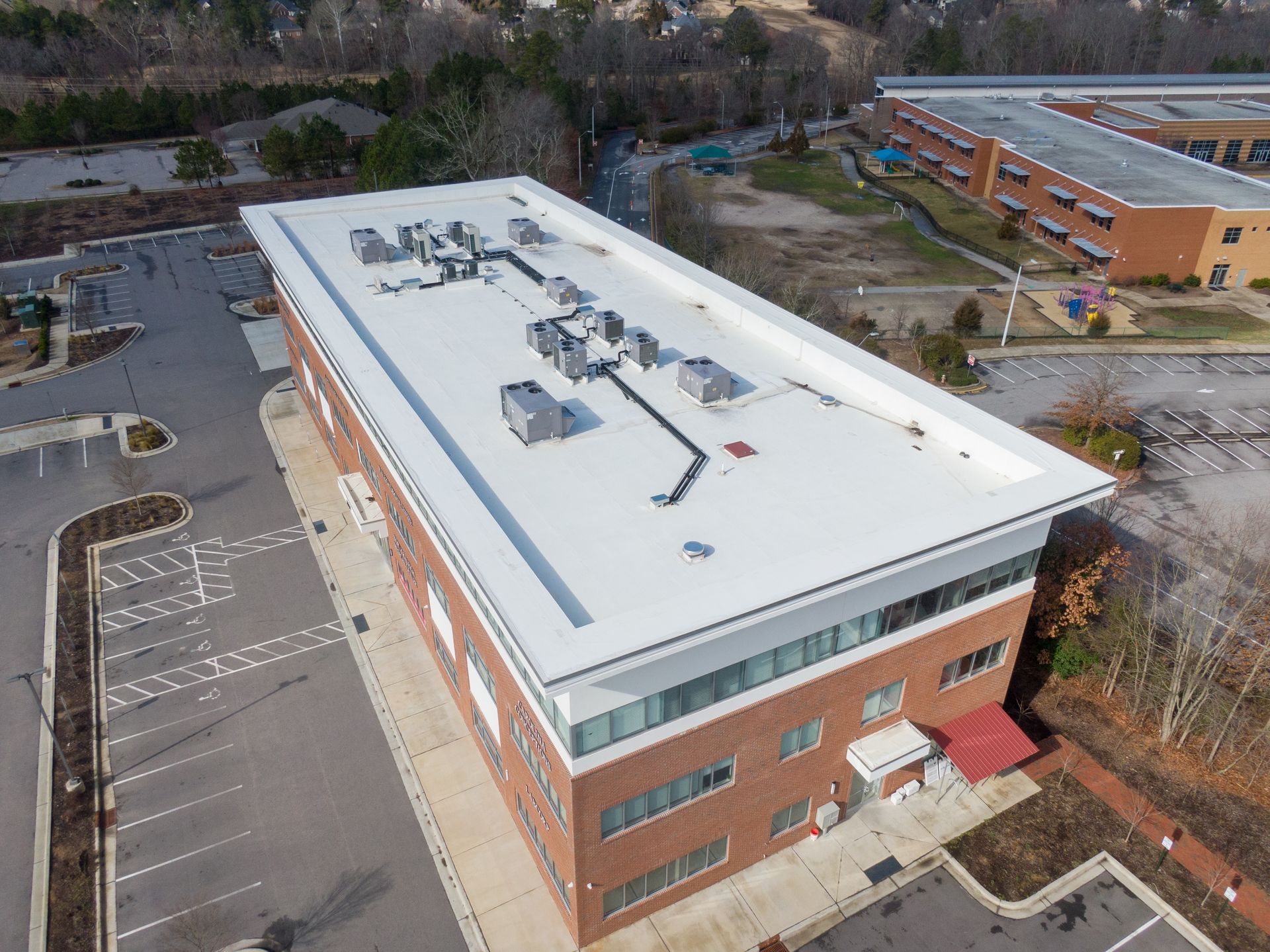
Flat roofs on commercial buildings in Bonners Ferry accumulate snow load differently than pitched systems, and the stress that creates shows up in specific, identifiable ways: membrane seam separation at low points, fastener pull-through at parapet edges, and interior ceiling staining concentrated near structural beams rather than distributed across the span. Each of those failure signatures points to a different root cause and requires a different repair or replacement approach. Diagnosing from the roof surface without checking interior conditions produces incomplete assessments that lead to repeated service calls for the same underlying problem.
After a commercial roof replacement is completed, building owners notice that interior moisture events stop occurring—ceiling tiles stay dry, insulation above the drop ceiling no longer carries trapped moisture, and HVAC units mounted on the roof deck stop showing corrosion at their base flanges. Standing seam metal installations produce a different observable outcome: panel alignment is consistent across the full roof span, ridge caps terminate cleanly at both ends, and panel seams remain weather-tight without sealant as a substitute for correct mechanical seaming.
North Star Roofing also navigates insurance claim documentation for commercial roofing projects, which requires accurate damage categorization specific to commercial policy language. Commercial claims are processed differently than residential ones, and the documentation submitted at the outset of a claim determines how efficiently the adjuster can evaluate scope and coverage—a detail that affects project timelines and out-of-pocket exposure for the property owner.
Questions About Commercial Roofing Work
The following questions cover how commercial roofing projects are assessed, sequenced, and completed in Bonners Ferry, where business properties range from single-story retail buildings near town center to larger structures with complex flat-roof drainage requirements.
What does a commercial roof inspection include beyond looking at the surface?
A thorough commercial inspection includes the interior structural assessment—checking framing members for deflection, examining insulation above drop ceilings for moisture retention, and identifying whether ceiling staining aligns with roof-level seams or penetrations. Surface-only inspections miss the evidence that explains why a membrane is failing at a specific location.
How is a standing seam metal installation sequenced on a commercial building?
Panel fabrication and bending happen before any material goes on the roof, because corrections made at the panel stage cost far less than corrections made after installation has begun. Panels are lifted and seated in sequence from eave to ridge, with each seam mechanically locked before the next panel is positioned—sealant at seams is a supplemental step, not a substitute for correct mechanical joinery.
What separates a commercial flat roof that drains correctly from one that pools water?
Drainage depends on the slope built into the roof deck itself, not the membrane layer applied over it. In Bonners Ferry commercial buildings where original construction used minimal slope to minimize framing cost, membrane installation must account for existing low points by directing them toward functioning drains rather than treating them as flat surfaces.
How do material and labor warranties differ on a commercial roofing project?
Material warranties are issued by the membrane or panel manufacturer and cover product defects under specific installation conditions. Labor warranties cover workmanship and are issued by the installing contractor; the two cover separate failure modes, have separate exclusion clauses, and require separate claim submissions if a problem develops after installation.
Why does installation sequencing matter for an occupied commercial building?
When sections of a commercial roof are replaced while the building remains in use, the sequence determines how long interior spaces are exposed to open decking. Planning the sequence around business hours and occupancy patterns keeps disruption contained and reduces the risk that a weather event during installation affects building contents or operations.
North Star Roofing manages the full scope of commercial roofing projects in Bonners Ferry, from structural inspection through material selection, installation, and insurance claim documentation. To discuss your property's specific roofing condition, call (208) 304-6980 and set up an on-site evaluation.