Repair Work Guided by Diagnostic Honesty
Roof repair in Bonners Ferry for properties with localized damage that warrants targeted repair rather than full system replacement
Not every roof problem requires full replacement, but determining which category a given roof falls into requires an inspection that goes deeper than the surface. North Star Roofing performs selective roof repairs in Bonners Ferry on residential and commercial properties, with every repair engagement beginning at the attic—not the damaged shingle or failed flashing visible from outside. The attic tells a different story: whether moisture has been tracking for one season or several, whether decking is compromised beyond the area that looks affected from the surface, and whether the damage pattern is localized or systemic. When the inspection reveals systemic deterioration, the owner recommends replacement and refers patchwork-only requests elsewhere rather than collecting a repair fee for work that will not resolve the underlying condition.
The repair process begins with a full on-site assessment covering both the roof surface and the attic space below it. Material condition is evaluated across the entire field—not just the area showing obvious damage—to determine whether surrounding shingles or membrane have enough remaining life to support a targeted repair without creating a mismatched system that fails at the boundary between old and new material. Ice dam damage, hail impact, and snow load stress each leave specific failure signatures in Bonners Ferry properties, and identifying which mechanism caused the damage determines what the correct repair involves and whether it is sufficient on its own.
Arrange an on-site diagnostic inspection to get an honest assessment of whether your roof's current condition supports repair or points toward replacement.
How Roof Repair Is Done Correctly
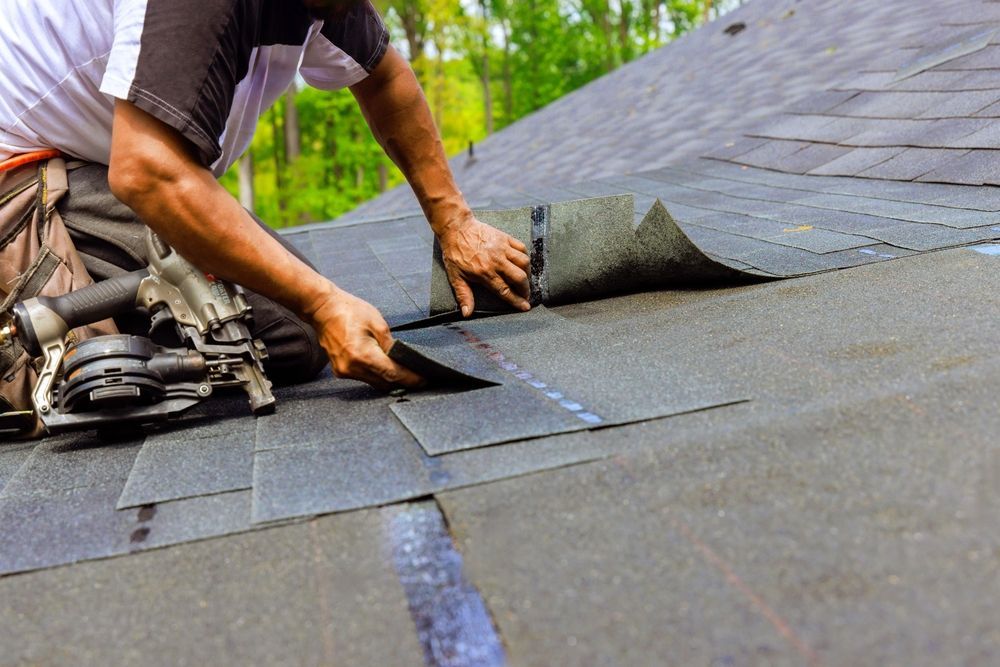
A targeted repair that is done correctly addresses the failure mechanism, not just the visible symptom. Failed step flashing at a wall junction, for example, requires removing the shingle courses that overlap the flashing, replacing the flashing, and reinstating those shingle courses with correct integration—not applying sealant over the existing flashing edge and considering the job complete. Sealant-over-flashing repairs create a temporary waterproof seal that fails when the sealant shrinks away from the substrate, typically within two to three seasons, leaving the same failure point in worse condition because the original flashing has now been adhered and is harder to remove cleanly.
After a correctly executed repair, the visible indicators are specific: the repaired area matches the plane and coursing of the surrounding roof, flashing transitions are clean and integrated rather than sealant-bridged, and the attic below the repaired section shows no new moisture evidence after the first rain or snowmelt event following the work. Interior staining, where it was present, stops advancing—a clear indicator that the water entry point was actually addressed rather than redirected.
North Star Roofing is direct about the boundary between repair-eligible damage and replacement-necessary deterioration, and that distinction is communicated clearly before any work is proposed. In Bonners Ferry, where older residential properties in and around town center may be carrying original or early-replacement roofing systems, a repair recommendation without an honest lifecycle assessment does the property owner no practical good. The inspection is the work that makes the repair recommendation credible—and it is where every engagement begins.
Before Starting Your Roof Repair Project
The following questions address how roof repair decisions are made, what the assessment involves, and what distinguishes a repair that holds from one that defers the same problem to a later date.
How does an attic inspection change a roof repair assessment?
The attic reveals whether moisture has been entering the structure for long enough to compromise decking or framing beyond the area visible from the roof surface. A shingle that looks like it failed recently may be sitting above decking that has been wet for multiple seasons; replacing the shingle without addressing the decking condition produces a repair that will fail again in the same location.
What are the signs that a roof repair is sufficient versus a signal that replacement is the right scope?
Repair is appropriate when damage is confined to a small, clearly bounded area and the material surrounding it is in sound condition with remaining life. Replacement is the correct scope when granule loss is widespread, when soft decking appears in multiple locations, or when the same location has been repaired more than once without resolving the problem—a pattern indicating that a systemic condition rather than a discrete failure event is driving the damage.
How is hail damage assessed to determine whether repair or replacement is warranted?
Hail impact leaves circular bruising or granule displacement on shingles, but the severity varies by hail size, shingle age, and impact angle. An assessment counts impact sites per square foot across the full roof field; when impact density exceeds the threshold where underlying mat integrity is compromised across a large portion of the field, repair addresses only a fraction of the actual damage.
What does a correct flashing repair involve at a chimney or wall junction?
Correct flashing repair at a chimney includes removing deteriorated counter-flashing from the mortar joint, cutting a new reglet if the original is too shallow, seating new step and counter-flashing, and repointing the mortar joint to hold the new flashing in place. In older Bonners Ferry homes where original chimney flashing was surface-applied rather than mortared, the repair often requires creating the correct installation condition that was never there originally.
Why does a repair at one location sometimes fail to stop interior water intrusion?
Water entering a roof does not always exit directly below the entry point—it follows the path of least resistance across the decking, down rafters, and through insulation before appearing on a ceiling. Repairing the visible damage point without tracing the full water path leaves secondary entry points active, which is why interior staining continues after a surface repair that appeared to address the problem.
North Star Roofing provides roof repair assessments and services in Bonners Ferry with an approach centered on diagnostic accuracy before any repair recommendation is made. To schedule an inspection that covers both the roof surface and the attic space below it, call (208) 304-6980.