
Full Replacement Done Once, Done Correctly
Roof replacement in Bonners Ferry for properties where existing material, decking, or structural condition has moved past repair
A roof replacement that starts with a surface-only look at the existing material misses the evidence that actually determines scope. North Star Roofing replaces residential and commercial roofs in Bonners Ferry—covering asphalt shingle, metal standing seam, and flat-roof systems—with every project beginning at the attic rather than the ridge. What the attic reveals about moisture tracking, decking deflection, and ventilation history determines whether a straight material swap will hold or whether deck corrections need to happen before any new system goes down. The owner's focus on full-replacement work, rather than patchwork repairs, reflects a straightforward observation: partial fixes on a structurally compromised roof defer costs without resolving the condition that created the problem.
The replacement process includes full removal of existing material, deck assessment with any soft or deteriorated sheathing identified and addressed, material selection review based on structural findings, and a warranty breakdown that separates manufacturer coverage from labor terms before installation begins. Hail impact, ice dam formation, and snow load stress—common damage patterns on Bonners Ferry properties—each leave distinct signatures on decking and sheathing that affect how replacement is sequenced and what deck prep is required before new material is installed.
Set up a full roof and attic inspection to determine whether your property's current condition calls for targeted repair or a complete replacement.
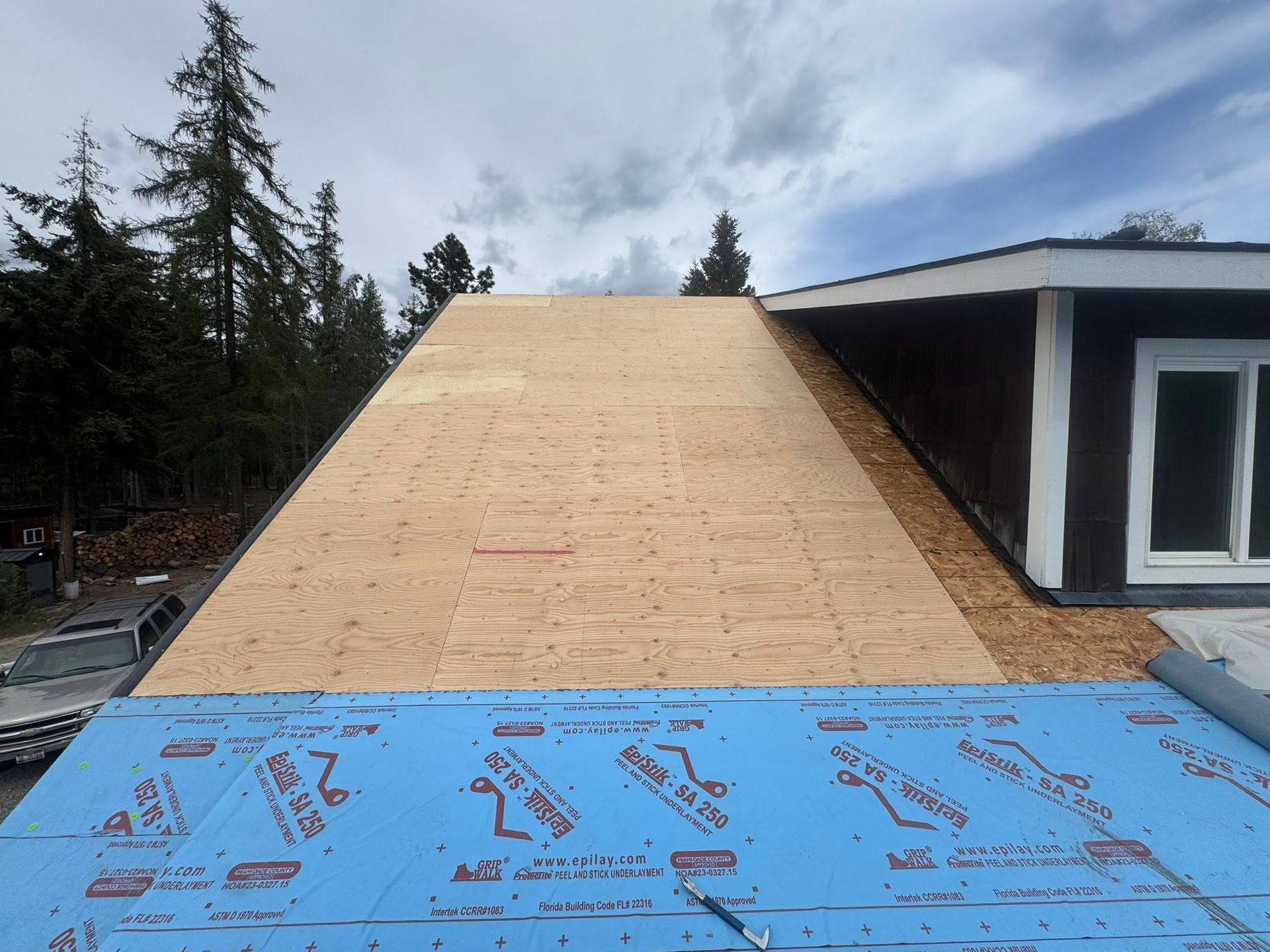
The Difference Between Patching and Replacing
Patchwork repairs on a roof that has reached the end of its functional life create a visible seam between old and new material that performs differently under load—the new section sheds water at a different rate, the adhesion strips are in different lifecycle stages, and flashing installed at different times may not be compatible at transitions. North Star Roofing prioritizes full replacements specifically because the alternative of matching new material to aging surrounding shingles produces a system that is only as durable as its weakest section. When an inspection reveals granule loss across the majority of a shingle field, or soft decking in multiple locations, the honest scope is replacement, and the estimate reflects that.
After a full replacement is completed, property owners notice that interior conditions stabilize in ways that partial repairs never achieved: attic temperature differentials normalize, ceiling staining stops progressing, and water intrusion at wall junctions and penetrations ceases rather than migrating to a new location. The visible exterior changes are equally clear—consistent shingle coursing without the color and texture variation that patchwork leaves behind, and flashing that is fully integrated rather than applied over existing material.
North Star Roofing handles insurance claim documentation for replacement projects, which matters most when the triggering event is a hail strike or storm damage. Insurance documentation for a replacement claim requires specific damage categorization—photographs organized by damage type, measurements of affected area, and notation of all secondary damage to flashing, gutters, and penetration covers—because adjusters evaluate claims against that documentation, not against the contractor's verbal description of what they found.
Common Questions About the Work
The following questions address the replacement process itself—what gets assessed, how decisions are made, and what the finished project should look like—relevant to the range of residential and commercial properties in Bonners Ferry.
What does the deck assessment during a roof replacement actually check?
Once old material is stripped, every sheathing panel is checked for soft spots, delamination, edge rot, and fastener pull-through. In Bonners Ferry homes where original construction used board sheathing rather than plywood or OSB, those boards are also checked for spacing gaps that could telegraph movement into the new roofing system above.
How does material selection change when replacing a roof rather than installing on new construction?
Replacement adds the constraint of matching the new system to the existing structural geometry—existing rafter spacing, eave overhang dimensions, and penetration locations all factor into which system installs without requiring structural modifications. New construction allows those variables to be set for the selected system; replacement requires working around what is already there.
When is an ice dam pattern on a Bonners Ferry roof a signal that replacement is warranted rather than just damage repair?
Ice dam damage that appears repeatedly in the same location across multiple winters indicates that the roof's ventilation and insulation configuration is causing heat loss at that point—damage repair alone does not fix the underlying thermal condition. Replacement provides the opportunity to correct ventilation during installation, which eliminates the mechanism that forms ice dams rather than simply repairing the evidence they leave behind.
What is the correct sequence for removing old material before new installation begins?
Tear-off proceeds in sections to keep decking exposure manageable; old shingles are stripped back to bare decking one section at a time, with underlayment going down in the same session before that section is left overnight. This sequence limits how much exposed deck is vulnerable to unexpected precipitation during a multi-day replacement project.
How should a completed roof replacement look at the flashing and transition points?
All pipe boot flashings should be seated against the penetration with no visible gap between the boot collar and the pipe surface. Step flashing at wall junctions should be woven into the shingle course at each step, not surface-applied after the shingles are down. Valley flashing should extend a consistent distance under each adjacent shingle course without exposed fasteners in the weather surface.
North Star Roofing completes full roof replacements in Bonners Ferry on residential and commercial properties, handling everything from attic inspection through material removal, deck prep, installation, and insurance documentation. Call (208) 304-6980 to schedule a property evaluation and get a clear picture of what replacement involves for your specific structure.